Huipsov Blog

Search: "" Clear
Customer Stories 3 min read
6 heinäkuun, 2026

TechStart Finland has four developers from Huipsov – and it’s fueling our growth

TechStart Finland shares their experience working with Huipsov's dedicated development team, and how this partnership has accelerated their product development without the usual hiring headaches. We're TechStart Finland, a fintech company based in Tampere. About a year ago, we hit that classic startup problem: our product was taking off, customer demand was growing fast, and our small internal team just couldn't keep up. We needed more developers, but the traditional hiring route felt too slow and risky for where we were at. Why We Went External Honestly, we tried the normal hiring process first. Put up job postings, worked with recruiters, interviewed candidates. But it was taking forever, and every week we weren't shipping features felt like we were losing ground to competitors. Plus, hiring is expensive—recruitment fees, onboarding time, the risk that someone might not work out after months of investment. That's when we started talking to Huipsov. They understood our situation immediately and put together a proposal for a dedicated team of four developers who could integrate with our existing workflow. It felt like exactly what we needed. Getting Started The onboarding process was smoother than we expected. Huipsov matched us with developers whose skills aligned with our tech stack, and they spent time understanding our codebase, our processes, and our company culture. Within two weeks, they were contributing meaningfully to our sprints. What impressed us wasn't just their technical skills—though those are solid. It was their commitment to quality and their willingness to really understand our product. They didn't just code what we asked for; they asked good questions, suggested improvements, and felt like part of our team from day one. The Impact on Our Business With this team in place, we've been able to move so much faster. Features that would have taken months are shipping in weeks. We're responding to customer feedback more quickly, experimenting with new ideas without being afraid of slowing down core development, and honestly, sleeping better at night knowing we have the capacity to handle growth. The team from Huipsov has become integral to how we operate. They're not some distant contractors we check in with occasionally—they're active participants in our daily standups, sprint planning, and product discussions. It's exactly the kind of partnership we needed.

Huipsov Tech Team

Kirjoittaja
MVP 18 min read
6 heinäkuun, 2026

MVP Development Services for Startups: Building Scalable Foundations in 2026

As Huipsov Oy, a Helsinki-based team specializing in MVP development, we walk you through how to transform your idea into a high-performance, scalable MVP that is ready for the market in as little as 8-12 weeks. As a startup founder, your vision is brilliant, but the path to a tangible product is often filled with uncertainty. The pressure to invest every resource perfectly, the struggle to find elite development partners, and the complexity of building for an AI-driven future can be overwhelming. Choosing the right MVP development services isn't just a technical decision—it's a critical strategic move that can define your trajectory before you even launch. This guide is your roadmap to navigating that decision with confidence. As Huipsov Oy, a Helsinki-based team specializing in MVP development, we will walk you through how to transform your idea into a high-performance, scalable MVP that is ready for the market in as little as 8-12 weeks. You will learn how to build a robust, AI-ready foundation that validates your core assumptions, captivates early users, and provides the investor-ready architecture needed to secure your next round of funding. It's time to move from vision to a validated, scalable reality. Key Takeaways Shift your perspective from a 'Minimum Viable Product' to a 'High-Impact Foundation' to properly validate your market and avoid premature scaling. Understand when to choose custom engineering over no-code solutions to avoid the 'flexibility trap' that hinders growth at the Series A funding stage. Effective MVP development services must build a scalable asset by integrating security, performance, and AI-readiness from day one. Discover how to structure your development partnership for long-term innovation, moving beyond a single project to a dedicated team that supports you through post-launch challenges. Table of Contents The Strategic Role of MVP Development for Startups in 2026 The 'Huippu' MVP Framework: Engineering for Scalability and AI-Readiness Evaluating Your MVP Path: Custom Development vs. Rapid Prototyping Navigating the MVP Roadmap: From Helsinki Tech Hub to Global Market Scaling Beyond the MVP: Why Huipsov is Your Long-Term Innovation Partner The Strategic Role of MVP Development for Startups in 2026 In the competitive Swiss startup ecosystem, the concept of a Minimum Viable Product is evolving. The traditional approach, often defined as the most basic version of a new product, is no longer sufficient. For 2026, we must redefine the 'M' in MVP from 'Minimum' to 'High-Impact'. This means launching a product that, while limited in scope, is polished, stable, and solves a core problem so effectively that early adopters are willing to pay for it. This strategic shift directly addresses a stark reality: approximately 90% of startups fail over time, most commonly due to lack of market need, poor product-market fit, or premature scaling, not simply because the original idea was bad, but from premature scaling built on unvalidated assumptions. The expectations of investors, from Zurich to Geneva, have shifted accordingly. The era of funding based on a charismatic pitch and a 'vibe' is over. Today's investors demand traction-real user data, engagement metrics, and early revenue. Your MVP is the most powerful tool for generating this proof. It acts as your primary risk-mitigation instrument in a volatile market, transforming abstract business plans into tangible assets. Engaging with professional MVP developer is no longer just about building a product; it's about building a data-driven case for your venture's future, saving you hundreds of thousands of Francs by validating your course before committing to full-scale development. Validation vs. Prototyping: Knowing the Difference Understanding the right tool for the right stage is crucial. A clickable prototype is for gathering feedback on a concept, while an MVP is for validating a business model with real-world transactions. Before writing code, consider a 'Smoke Test'-a landing page explaining your product to gauge real purchase intent. Crucially, excellent UX/UI design ensures your 'minimum' product doesn't feel cheap, creating a premium first impression that builds trust and encourages adoption. The Cost of Technical Debt in Early-Stage Ventures Technical Debt is the compound interest of poor early decisions. The old mantra of 'moving fast and breaking things' has become a liability, leading to costly rebuilds that can cripple a young company. Modern mvp development services for startups focus on building a clean, scalable foundation. This means architecting a system for your first 1,000 users with a clear, strategic path to accommodate 1,000,000, ensuring your early speed doesn't mortgage your future growth. The 'Huippu' MVP Framework: Engineering for Scalability and AI-Readiness In Helsinki, building a startup requires more than just a good idea; it demands engineering excellence. The 'Huippu' (Finnish for 'peak') framework is our approach to MVP development services, embedding principles of precision, security, and long-term vision into your product from the very first line of code. We focus on creating a Minimum Viable Product that is not just functional, but a robust foundation for future growth. Our framework is built on three core pillars: Security, ensuring your application and user data are protected to meet stringent Swiss standards; Performance, delivering a fast, responsive user experience that builds trust; and Empathetic Design, creating an intuitive interface that solves a real user problem. While the Agile Alliance defines MVP as a tool for validated learning with minimal effort, our Huippu philosophy ensures this initial effort establishes a scalable, AI-ready architecture, preventing costly refactoring down the line. AI & Machine Learning: No Longer Optional We build with an 'AI-First' mindset because intelligence is the new baseline for user expectation. This means integrating predictive analytics to anticipate user needs or using custom LLM agents to automate complex workflows, turning your MVP into an indispensable tool. For our Swiss clients, we place paramount importance on data privacy, architecting systems that are compliant with FADP and GDPR from day one, ensuring your innovation is built on a foundation of trust. The Tech Stack for 2026: Choosing Your Foundation A forward-thinking tech stack is crucial for balancing speed with scalability. For rapid development and robust performance, we often recommend frameworks like Next.js for web applications and Flutter for seamless cross-platform experiences. The choice between a Serverless architecture (ideal for agility and cost-efficiency in the first 12 months) and Microservices (better for complex, long-term platforms) is a strategic decision we help you make, ensuring your technical foundation supports your business goals, not limits them.   Evaluating Your MVP Path: Custom Development vs. Rapid Prototyping For Swiss startups, the journey from idea to market presents a critical choice: build fast with No-Code/Low-Code tools, or invest in a scalable foundation with custom engineering. While rapid prototyping offers impressive speed for initial validation, it's crucial to understand the long-term trade-offs. The right path depends on your product's core requirements and your vision for growth. Before committing, it's essential to ruthlessly prioritise. We often guide founders through the MoSCoW method to distinguish between essential and non-essential features: Must-Have: Core functionalities without which the product fails. Should-Have: Important, but not critical for the first launch. Could-Have: Desirable improvements if time and resources permit. Won't-Have: Features explicitly excluded from the current scope. This clarity helps avoid the 'Flexibility Trap'. Many startups build a No-Code MVP, only to hit a wall when scaling for a Series A round. The platform can't support a unique algorithm, integrate with a key enterprise system, or handle the required user load. This forces a costly rebuild, erasing any initial time savings and delaying critical growth. When to Invest in Custom MVP Development Custom development is non-negotiable when your product handles sensitive information, requiring compliance with Swiss regulations like FINMA for fintech or strict data privacy laws for healthtech. It is also the only path for implementing the proprietary algorithms that define your competitive edge. While the initial investment is higher, it often proves more economical than paying thousands of CHF in compounding monthly subscription fees for multiple Low-Code tools. The Hybrid Approach: Accelerating Custom Builds The best mvp development services leverage a hybrid approach. At Huipsov, we accelerate custom builds by integrating pre-built, secure modules for standard features like user authentication and payment gateways. Furthermore, our proprietary internal libraries can cut development time by up to 30%. This allowed a recent Zurich-based fintech client to launch a secure, scalable platform months ahead of schedule, achieving both speed and quality. This strategic path ensures your MVP is a solid foundation, not a temporary solution. Once you've defined your approach, the next crucial step is Choosing the Right Tech Stack for Your MVP to ensure that foundation is built to last. Navigating the MVP Roadmap: From Helsinki Tech Hub to Global Market A successful launch is not a frantic sprint, but a well-paced journey. Building a Minimum Viable Product (MVP) requires a clear, strategic roadmap that transforms a brilliant idea into a market-ready solution. This structured process ensures resources are used effectively, risks are minimized, and your vision remains the guiding star. Our approach is built on clarity, collaboration, and a calm, deliberate execution. The path from concept to your first users typically follows four distinct, restorative phases: Phase 1: Discovery & Strategy - We begin by mapping your 'Huippu' (peak) vision. This foundational stage involves deep workshops to align your business goals with genuine user needs, ensuring every feature we build serves a core, validated purpose. Phase 2: Design & Prototyping - Before a single line of code is written, we validate the user journey with tangible, interactive prototypes. This empathetic approach allows for crucial early feedback from stakeholders and potential users, preventing costly revisions. Phase 3: Agile Development - Using focused two-week sprints, we build your product with maximum transparency. You receive regular updates and working software, maintaining a predictable rhythm that eliminates uncertainty and keeps the project moving forward peacefully. Phase 4: Launch & Iterate - The goal is not immediate perfection, but rapid learning. We focus on launching a stable, core product to attract your first 100 'true fans' and collect invaluable real-world data to guide your next steps. The Helsinki Advantage: Leveraging the Local Tech Ecosystem For Swiss founders, basing your development in Helsinki offers a unique trust signal. The 'Finnish Quality' seal is globally recognized in software engineering, reassuring investors of a robust and reliable product. Furthermore, startups can access supportive networks and Finnish innovation grants, such as those from Business Finland, which can provide seed funding often equivalent to over 50,000 CHF, giving your project a significant financial foundation. Post-Launch: The First 90 Days The journey truly begins after launch. We help you establish critical feedback loops using analytics, heatmaps, and direct user interviews. This data allows you to prioritize the 'Version 2.0' roadmap based on evidence, not ego. The best mvp development services for startups prepare you for your first major technical pivot, ensuring you can adapt calmly and confidently as you learn what your customers truly value. With expert guidance, this phase becomes one of growth, not stress. Scaling Beyond the MVP: Why Huipsov is Your Long-Term Innovation Partner Launching your Minimum Viable Product is a monumental first step, but it is just that-the first. The true journey begins as you find product-market fit and face the pressures of scaling. Many startups falter in this phase, caught between accelerating user demand and the technical debt of a rapidly built MVP. At Huipsov, we see beyond the initial build. We provide continuous, strategic support, evolving from a project team into your dedicated innovation partner, ensuring your technology foundation is as ambitious as your vision. From MVP to SaaS: The Growth Trajectory As your user base grows from hundreds to thousands, your initial architecture will be tested. We guide you through this critical transition, re-engineering your platform for scalability and reliability. This often involves implementing robust DevOps practices and Continuous Integration/Continuous Deployment (CI/CD) pipelines to ensure stable, frequent releases. Our experience supporting founders from Seed to Series B means we anticipate these growing pains, providing the right technical leadership at every stage. Staff Augmentation: Your Secret Weapon for Speed Navigating the competitive Helsinki talent market to find senior developers can drain precious time and resources. Our staff augmentation model offers a calmer, more effective path. We seamlessly integrate our senior experts into your team, allowing you to scale your development capacity overnight without the risks and overhead of traditional hiring. This approach is detailed in our guide, Staff Augmentation in Finland: Scaling Your Tech Team, and it's designed to help you cross the "valleys of death" between funding rounds. Our partnership is built on a foundation of trust and transparency. We believe that providing exceptional MVP development services means empowering founders for the long term. That is why every collaboration comes with the Huipsov guarantee: Clean, Maintainable Code: We write code that your future team will understand and love, reducing technical debt from day one. Full Intellectual Property Ownership: You own 100% of the code and all associated IP. Your innovation is yours, unequivocally. Zero Vendor Lock-In: Our goal is to make ourselves essential through value, not dependency. We ensure you can transition to a fully in-house team whenever you are ready. Your MVP is the start of a marathon, not a sprint. Let's build a resilient, scalable future for your company, together. Book a discovery call at our Helsinki office to discuss how we can become your long-term technology partner. Chart Your Course from MVP to Market Leader The journey from a promising idea to a market-defining product in 2026 begins with a single, strategic step: a well-architected Minimum Viable Product. A successful MVP is more than a test; it's a scalable, AI-ready foundation for future growth. Choosing the right partner for mvp development services for startups is therefore the most critical investment in your long-term vision, providing not just code, but the strategic clarity needed to navigate the competitive Swiss and global markets. At Huipsov, our Helsinki-based senior engineering team specialises in building these foundations. With deep expertise in AI and SaaS scalability, we offer transparent fixed-price or dedicated team models to provide the guidance your startup needs. We are not just developers; we are your long-term innovation partners, committed to engineering excellence from day one. Ready to transform your vision into a scalable reality? Start your MVP journey with Huipsov's experts today. Your groundbreaking idea deserves a world-class foundation, and we're here to help you build it. Frequently Asked Questions How much does MVP development typically cost for a startup? In Switzerland, the cost for MVP development generally ranges from CHF 25,000 to over CHF 80,000. The final price is influenced by factors like feature complexity, the chosen technology stack, and the scope of the design work. A simple proof-of-concept will be at the lower end, while an MVP with advanced features like AI or third-party integrations will require a larger investment. We provide a detailed, transparent quote after an initial discovery workshop to align with your specific goals and budget. How long does it take to build a functional MVP from scratch? Building a functional MVP from the ground up typically takes between 3 to 6 months. This timeline encompasses the entire process: from the initial discovery and strategy phase, through UX/UI design and prototyping, to the core development sprints, quality assurance testing, and final deployment. Our agile methodology ensures we can adapt to feedback efficiently and deliver a market-ready product within a predictable timeframe, focusing on the essential features that provide immediate value. Do you provide AI integration services for existing MVPs? Yes, we provide expert AI integration services to enhance existing MVPs. We can integrate intelligent features such as machine learning models for predictive analytics, natural language processing for advanced chatbots, or computer vision for data analysis. Our process begins with a thorough evaluation of your current architecture and data to identify the most impactful AI opportunities. We then build and deploy robust AI solutions that can create a significant competitive advantage for your startup. Can you help with the design phase or only the coding? Our services are comprehensive and cover the entire product lifecycle, not just the coding. We begin with a collaborative design phase that includes strategy workshops, user research, wireframing, and creating high-fidelity UI/UX prototypes. This user-centric approach ensures the final product is not only technically sound but also intuitive, engaging, and perfectly aligned with your users' needs. A strong design foundation is critical for an MVP's market success. What happens to the code ownership after the MVP is finished? You retain 100% ownership of the code and all intellectual property. Upon project completion and final payment, we transfer all assets to you, including the full source code, design files, and any related documentation. Our agreements are clear and transparent, ensuring there are no ambiguities about ownership. We believe your idea is your most valuable asset, and our role is to provide the expertise to bring it to life securely. Is it better to hire a freelancer or an MVP development company? While a freelancer can be suitable for small, isolated tasks, comprehensive mvp development services for startups are best handled by a dedicated company. An agency provides a multidisciplinary team-including project managers, designers, and developers-ensuring project continuity, broader expertise, and greater accountability. This integrated structure offers the reliability and scalability crucial for building a robust product foundation that can evolve and attract investor confidence. How do you handle security and data privacy in Swiss startups? We take security and data privacy extremely seriously, adhering strictly to Swiss regulations. Our development process is compliant with the Swiss Federal Act on Data Protection (FADP). We implement security best practices from day one, including data encryption at rest and in transit, secure coding standards (like OWASP Top 10), and regular security audits. This proactive approach ensures your application is robust, compliant, and builds essential trust with your users from the start. Can Huipsov help us prepare for investor technical due diligence? Yes, Huipsov can absolutely help you prepare for technical due diligence. We build every MVP with future growth and investment in mind. This means we deliver clean, well-documented, and commented code built on a scalable architecture. We provide comprehensive technical documentation that clearly outlines the system's structure and technology choices, giving investors full confidence in the technical foundation and long-term viability of your product.

Huipsov Tech Team

Kirjoittaja

Web Design 14 min read
6 heinäkuun, 2026

Responsive Web Design in 2026: The Definitive Guide for Founders and Tech Leaders

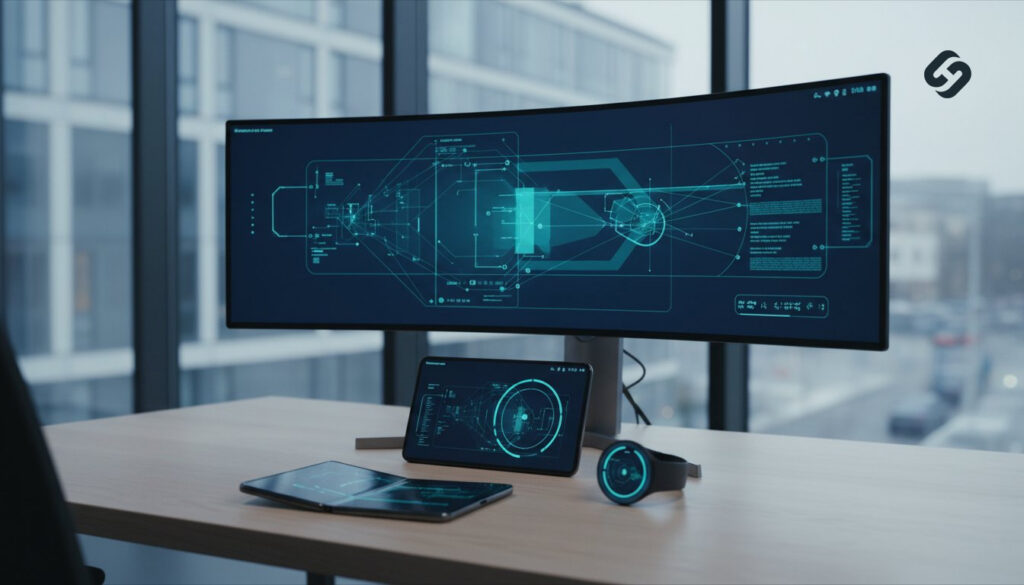
In this definitive 2026 guide, Huipsov Oy walks you through core principles for a truly scalable UI/UX framework: content-first approach, fluid grids, and a modern design-to-code workflow that reduces maintenance and delivers superior Core Web Vitals. In today's digital landscape, the user experience often feels fractured. As your product is viewed on foldable screens, smartwatches, and ultra-wide monitors, the traditional approach to responsive web design can feel like a complex puzzle for your team. The pressure to deliver a flawless experience on every device often leads to spiraling maintenance costs and performance bottlenecks, disrupting the calm and focus needed for true innovation. What if you could build a single, harmonious digital foundation that adapts gracefully to any screen? This is the promise of a modern, forward-thinking design philosophy. It's more than just a technical fix; it's a strategic approach to creating calm, consistent, and high-performing user experiences that feel effortless for your audience and sustainable for your team. In this definitive 2026 guide, we at Huipsov Oy will walk you through the core principles needed to build a truly scalable UI/UX framework. We'll explore how a unified codebase can significantly reduce your maintenance overhead—freeing up budgets potentially worth thousands of euros annually—and achieve the superior Core Web Vitals scores essential for growth. Let's build a digital future that is as resilient and adaptable as your vision. Key Takeaways Understand the strategic shift from a "mobile-first" to a "content-first" approach to future-proof your digital product's architecture. Analyze the development costs in CHF and user acquisition models of websites versus native apps to make the most strategic choice for the Swiss market. Learn the core technical principles, like fluid grids and flexible media, that enable modern responsive web design to deliver a high-performance experience on any device. Discover a modern design-to-code workflow that ensures your project is built on a solid, scalable foundation from day one. Table of Contents What is Responsive Web Design in 2026? The Technical Pillars of Modern Responsive Engineering Responsive Design vs. Native Apps: Strategic Analysis Implementation Guide: A Modern Design-to-Code Workflow Scaling Your Product with Huipsovs Engineering Excellence What is Responsive Web Design in 2026? In 2026, responsive web design is no longer just a feature; it's the fundamental architecture of a successful digital presence. At its core, it is a technical paradigm where a website's interface fluidly adapts to the user's environment—be it a smartphone, a tablet, or a desktop computer. The modern approach has evolved from a "Mobile-First" to a "Content-First" philosophy, where the structure and flow of information dictate the layout, ensuring a seamless experience on any device. For Swiss startups launching an MVP or a SaaS product, a responsive foundation is non-negotiable. It directly impacts user acquisition and retention. A site that functions flawlessly across all platforms builds immediate trust and authority. This positive first impression is crucial for driving conversions, while a clunky, non-responsive experience is a leading cause of user churn, sending potential customers to your competitors. The Evolution of the Responsive Paradigm The web has moved far beyond the rigid, fixed-width tables of its early days. Today, modern CSS technologies like Flexbox and Grid are the standard, allowing for dynamic and flexible layouts. This evolution is vital as we design for an ever-expanding range of devices, from foldable screens that present unique aspect ratios to ultra-wide monitors used in many Swiss offices. The old goal of a "pixel-perfect" design is obsolete; the new standard is "fluid-perfect," ensuring an optimal and consistent experience regardless of screen size. RWD vs. Adaptive Design: Understanding the Difference While often used interchangeably, responsive and adaptive designs are technically distinct. Responsive design uses a single, fluid layout that adjusts to screen size (client-side), whereas adaptive design loads a pre-set layout based on detected device breakpoints (server-side). For most growing businesses, the choice is clear: Flexibility: Fluid responsiveness provides a better user experience on the countless screen sizes between major breakpoints. Maintenance: Maintaining a single responsive codebase is far more efficient. An adaptive approach requires separate management for each layout, quickly increasing development costs, which can add thousands of CHF to your annual budget. The Technical Pillars of Modern Responsive Engineering Beyond simply shrinking a desktop site, true responsive engineering rests on a foundation of fluid architecture and intelligent adaptation. This approach ensures a seamless experience on any device. It's built on core concepts like fluid grids using relative units (%, rem), flexible media that loads efficiently, and adaptive queries that reshape content based on context, not just screen size. Mastering CSS Grid and Flexbox These two CSS layout models are the workhorses of modern web development. Flexbox excels at aligning items in a single dimension, perfect for navigation bars and forms. CSS Grid manages complex two-dimensional layouts, allowing intricate dashboards and data-heavy tables to elegantly reorganize for smaller screens. A key advantage is source-order independence, which ensures content remains accessible and logical for screen readers, regardless of its visual presentation. The Rise of Container Queries While media queries react to the entire viewport, container queries are a game-changer for component-based systems like React or Vue. They allow a UI component—like a product card or a chart—to adapt based on the size of its parent container. This creates truly modular, "plug-and-play" elements that look perfect anywhere you place them, dramatically reducing CSS complexity for sophisticated SaaS platforms. A sophisticated layout is only effective if it's fast. This is where performance optimization becomes a non-negotiable part of modern responsive web design. Techniques include: Flexible Images: Using the <picture> element or srcset attribute to serve appropriately sized images for different devices, preventing a smartphone from downloading a huge desktop graphic. Optimized Video: Implementing lazy loading for videos below the fold to speed up initial page rendering. Core Web Vitals Focus: Ensuring a low Largest Contentful Paint (LCP) and minimal Cumulative Layout Shift (CLS) to provide a stable, fast-loading experience. This focus on performance is crucial for satisfying both users and search engines. Responsive Design vs. Native Apps: Strategic Analysis For any Swiss business, the decision between a responsive website and a dedicated native application is a pivotal one, shaping everything from budget allocation to user acquisition. While a native app offers deep integration with device hardware, a strategy built on responsive web design provides unparalleled reach and efficiency. The choice is not merely technical; it is a fundamental business decision that balances development costs, market reach, and long-term maintenance. Why RWD is the Default for MVPs When launching a Minimum Viable Product (MVP), speed and learning are paramount. Responsive web design is the superior choice for this initial phase, offering a lean and agile foundation. This "develop once, deploy everywhere" philosophy is a cornerstone of modern digital strategy. The core advantages include: Accelerated Launch: A single codebase serves all users, regardless of device, dramatically reducing time to market compared to building separate iOS and Android apps. Cost-Effectiveness: In a high-value market like Switzerland, avoiding the CHF 50,000+ cost per platform for native app development makes RWD a financially sound starting point. Seamless Iteration: Updates are deployed instantly without waiting for lengthy app store approval processes, enabling rapid response to user feedback. SEO Foundation: All traffic and authority are directed to a single URL, strengthening your online presence from day one. SaaS-Specific Challenges in Responsive Design SaaS presents unique challenges: translating intricate desktop interfaces into an intuitive mobile experience requires rethinking user flows for smaller screens. A hybrid approach often works best—Progressive Web Apps (PWAs) offer app-like features such as push notifications and offline access through the browser, bridging the gap between responsive reach and app-like experience. Implementation Guide: A Modern Design-to-Code Workflow Achieving a seamless user experience for your Finnish audience requires more than just code; it demands a thoughtful, structured workflow. This modern approach to responsive web design moves beyond static pages, focusing instead on creating adaptable digital systems that serve users on any device. A truly effective process is iterative and collaborative, ensuring the final product is both beautiful and fundamentally functional. The journey can be broken down into five core phases: Phase 1: Content Inventory and Information Architecture. Before any design begins, understand your message. A content inventory clarifies what you need to communicate, while a solid information architecture (IA) organizes it logically. This content-first approach ensures the design serves the information, not the other way around. Phase 2: Low-fidelity Wireframing. Focus on hierarchy and flow, not aesthetics. Low-fidelity wireframes map out the user journey and establish the relative importance of elements on different screen sizes, ensuring key information is always accessible. Phase 3: Prototyping Fluid Transitions. Move beyond static images. Modern tools allow for creating fluid prototypes that demonstrate how the layout adapts between breakpoints. This helps stakeholders feel the user experience before development begins. Phase 4: Collaborative Engineering. Bridge the gap between design and development with a shared design system. Reusable components, defined styles, and clear guidelines ensure consistency and dramatically accelerate the development process. Phase 5: Automated Testing for 2026. Prepare for the future. As the device landscape evolves, automated testing tools can simulate a vast range of devices, browsers, and network conditions, ensuring your site remains robust for all users. AI is becoming an invaluable partner: generating optimized responsive CSS, compressing media for mobile, and assisting in QA across device configurations. Thorough testing must include real devices and simulators, performance profiling for low-bandwidth users, and adherence to WCAG 2.2 accessibility standards. Scaling Your Product with Huipsovs Engineering Excellence Understanding the importance of a flawless user experience is the first step. The next is partnering with an engineering team that can bring that vision to life with meticulous execution. At Huipsov Oy, we build digital products where principled responsive web design is an integral part of the architecture, not an afterthought. Our commitment is to create secure, scalable, and high-impact software that performs beautifully on every device used by your Finnish audience. Partnering with our Helsinki-based team means you gain: Strategic Scalability: Technology architected to grow seamlessly with your business. Uncompromising Security: Protecting your data and user trust from day one. High-Impact Performance: Fast, reliable, and engaging digital experiences. Expert Augmentation: The ability to add our responsive design experts directly to your team. Custom Software Development in Helsinki We combine deep local market understanding with a global mindset, upholding the legacy of world-renowned Finnish design—clean, functional, and deeply user-centric. For startups, we help you launch and scale your MVP without compromising on quality, embedding robust responsive web design from the initial build. Ready to build a digital product that resonates with users and scales for success? Schedule a consultation with our Helsinki team. Your Future is Fluid: Building a Lasting Digital Presence The digital landscape of 2026 demands more than a mobile-friendly site. True success lies in a deeply integrated, performant experience across every user touchpoint. From the technical pillars of modern engineering to the strategic choice between web and native applications, your decisions today define your product's scalability and market reach. A forward-thinking approach to responsive web design is not just a technical task—it's a core business strategy. The Helsinki-based engineering team at Huipsov specialises in building scalable, high-performance SaaS and AI-powered products. Build your responsive digital product with Huipsov and let's engineer a seamless future for your users, together. Frequently Asked Questions What is the main difference between responsive and adaptive web design? Responsive design uses a single, fluid layout that dynamically adjusts to any screen size. Adaptive design uses pre-designed, fixed layouts for specific device sizes; the server detects the device and delivers the appropriate layout. For modern standards, responsive design provides a more seamless and future-proof solution. Is responsive web design still necessary if I have a mobile app? Yes. Your website is often the first point of contact for new customers. A responsive website ensures a positive first impression and captures the widest audience. Your site is your universal digital front door; your app serves your most loyal customers. Both are crucial for a complete digital strategy. How much does it cost to implement responsive web design for a SaaS product? In Switzerland, for a relatively simple SaaS product, retrofitting might cost CHF 5,000 to CHF 15,000. For a complex platform requiring a complete redesign or custom development from the ground up, the investment could range from CHF 20,000 to over CHF 70,000, depending on screens, interactions, and scope. Will responsive design negatively affect my website performance? When implemented correctly, responsive design should enhance performance. Modern techniques like appropriately scaled images, lazy loading, and optimised code ensure mobile devices only download what they need. A slow site is typically from poor optimisation, not responsive principles. Can I turn an existing non-responsive website into a responsive one? Yes, through "retrofitting"—rewriting CSS and potentially altering HTML to make the layout fluid. Depending on the age and complexity of the codebase, this can sometimes be more challenging than a complete rebuild. A technical audit can determine if retrofitting or redesigning is more cost-effective. What are the most important breakpoints to consider in 2026? Best practice is shifting to content-driven breakpoints, where the layout adapts when content looks crowded. For a foundational strategy, plan around: small under 600px (smartphones), medium 600–900px (tablets), large 900–1200px (laptops), and extra-large above 1200px. How does responsive web design impact my SEO rankings in Switzerland? It has a significant impact. Google uses mobile-first indexing, primarily evaluating the mobile version for ranking. A site that is not mobile-friendly will be penalised on Google.ch. A solid responsive design ensures a positive experience on all devices, which is a strong quality signal for search engines and fundamental for organic performance in the Swiss market.

Huipsov Tech Team

Kirjoittaja
Customer Stories 3 min read
6 heinäkuun, 2026

Nordic Solutions Increased Their Development Capacity With Huipsov

Nordic Solutions, an industrial software company in Oulu, shares how partnering with Huipsov transformed their ability to deliver on ambitious product roadmaps while maintaining their quality standards. I'm Laura Mäkinen, and I lead product development at Nordic Solutions. We build specialized software for the manufacturing industry, and honestly, we've been in a pretty good position for the past few years. Our products are solid, customers are happy, and the business is growing. But that growth was creating a problem we hadn't expected. The Capacity Crunch As we added more enterprise clients, the feature requests started piling up. Our internal team was excellent, but there were only so many hours in the day. We had ambitious plans for new product modules, integrations with partner systems, and modernizing some of our legacy components. But executing on all of it? That would have meant hiring aggressively, and we'd seen how that can go sideways. The challenge wasn't just finding developers—it was finding developers who understood our domain (industrial manufacturing software is pretty niche), our tech stack, and our culture. Plus, if market conditions changed, we didn't want to be stuck with a huge payroll we couldn't support. Why Huipsov Made Sense When we started talking to Huipsov, they got it immediately. They didn't try to sell us on a generic team—they asked deep questions about our product, our technical requirements, and how we work. They assembled a team with the right mix of skills: some backend specialists for our API work, frontend developers who could handle our complex UI, and a full-stack developer who could jump between layers. The team integrated into our workflow within weeks. They use our tools, follow our processes, attend our standups, and honestly feel like part of our internal team. The difference is we didn't have to go through months of recruiting, onboarding, and hoping everything worked out. What We've Been Able to Do Since bringing in the Huipsov team, we've accelerated our roadmap significantly. Projects that would have taken six months are shipping in three. We're running multiple development streams in parallel—something we never could have done before. And the quality? It's been excellent. They understand our standards and consistently meet them. Maybe the biggest win is flexibility. When we needed to temporarily shift focus to a critical customer request, we could adjust team allocation quickly. When we wanted to experiment with a new technology stack, we had the capacity to do it without derailing core work. That kind of agility is really valuable in our industry. Looking back, partnering with Huipsov was one of the better strategic decisions we've made. It gave us the capacity to grow without the risks and overhead of traditional hiring, and honestly, it's been a smoother experience than I expected.

Huipsov Tech Team

Kirjoittaja
SaaS 18 min read
6 heinäkuun, 2026

How to Build a SaaS Product in 2026: The Comprehensive Founder’s Roadmap

Your comprehensive founder's roadmap: from market validation to tech architecture, AI integration, and scaling with a dedicated team. Build your SaaS vision the right way. Is the fear of building a product no one will use keeping you up at night? The dream of a successful SaaS company can quickly become a source of anxiety when you're faced with a mountain of technical choices and the looming question of AI integration, with potential initial costs easily reaching tens of thousands of euros. These challenges are real, but they are not insurmountable. The landscape for how to build a SaaS product is rapidly changing, and the old playbooks are no longer sufficient for the competitive Finnish and global markets of 2026. Consider this your comprehensive founder's roadmap, designed to cut through the noise and transform your uncertainty into a clear, actionable strategy. We will guide you step-by-step through the entire journey: from initial market validation that guarantees demand, to choosing the right technical architecture for future growth. You will gain the confidence to integrate AI meaningfully and cost-effectively, and learn precisely how to scale your team for sustainable success. Let's build your vision, the right way. Key Takeaways Prioritize deep market validation to solve a genuine customer problem; this is the foundation of a successful SaaS, shifting focus from features to solutions. Learn how to choose a future-proof tech stack and navigate a structured development lifecycle to build a resilient and secure multi-tenant architecture. Discover how to build a SaaS product that leverages AI for more than just support, creating predictive experiences that boost user retention and efficiency. Understand the critical inflection point for scaling and why partnering with a dedicated development squad can be your key to sustainable growth and technical excellence. Table of Contents Defining Your SaaS Vision: Market Validation in the 2026 Economy The SaaS Development Lifecycle: A 6-Step Engineering Roadmap Architecting for Resilience: Tech Stacks and Multi-Tenant Security The AI Advantage: Enhancing User Experience and Operational Efficiency Scaling with Precision: Why a Helsinki-Based Partner Makes the Difference Defining Your SaaS Vision: Market Validation in the 2026 Economy Before a single line of code is written or thousands of Swiss Francs are invested, the foundation of a successful SaaS platform is laid in understanding, not building. The journey of Software as a Service (SaaS) has evolved beyond a simple delivery model; it is a commitment to providing continuous, evolving value. In today's market, the focus has shifted decisively away from "feature-rich" products toward elegant solutions that solve a single, deeply felt "Core Pain." Answering this need is the first step in learning how to build a saas product that endures. The most critical question is not "what can we build?" but "what recurring problem are users willing to pay to solve?" The 2026 SaaS Landscape: Trends and Expectations Looking toward 2026, the SaaS market is maturing. We see a definitive shift towards vertical SaaS-hyper-specialized tools for niche industries, from Geneva's wealth management sector to Basel's pharmaceutical research. User expectations have also peaked; a seamless, high-performance experience across all devices is the baseline, not a luxury. This new standard is often influenced by the "Helsinki approach" to software, which prioritizes robust quality, minimalist design, and unwavering user trust-principles that resonate deeply within the Swiss market. Validating Your Idea Without Building a Full Product Validating your vision doesn't require a finished product or significant capital. It requires a strategic, lean approach to test your core hypothesis: will people pay for this solution? Here are three essential steps: Conduct Deep-Dive User Interviews: Go beyond surveys. Sit down with potential customers and listen to uncover the hidden frictions and emotional drivers behind their challenges. What manual workarounds are they currently using? Use Landing Page "Smoke Tests": Create a simple webpage that clearly explains your value proposition. Include a call-to-action like "Pre-order for an early-adopter price of CHF 20" or "Join the Private Beta." This measures genuine purchase intent, not just casual interest. Define Your North Star Metric: Before development, identify the single metric that best represents user success. For a project management tool, it might be "tasks completed per week." This metric will guide every future product decision with clarity and purpose. The SaaS Development Lifecycle: A 6-Step Engineering Roadmap Understanding how to build a SaaS product that lasts requires a structured, yet flexible, engineering roadmap. This journey from concept to a scalable platform is not a single sprint but a carefully managed lifecycle. A disciplined approach ensures you invest resources wisely and validate your assumptions at every turn. We break it down into six core phases: Phase 1: Discovery & Strategy: Aligning your technical build with a clear market need and business goals. Phase 2: UX/UI Design: Crafting an intuitive interface, often guided by "Calm Technology" principles to reduce cognitive load and enhance user focus. Phase 3: MVP Development: Building the essential, core version of your product to solve one problem exceptionally well. Phase 4: Quality Assurance & Security: Implementing rigorous testing to ensure stability and protect user data, a critical factor in the Swiss market where data privacy is paramount. Phase 5: Deployment & Soft Launch: Releasing the product to a limited audience to gather initial, real-world feedback. Phase 6: Iteration & Scaling: Using that feedback to refine the product and prepare for wider market growth. From Idea to MVP: Prioritizing the Core Value The MVP (Minimum Viable Product) stage is where your idea becomes tangible, and it's a critical step in learning how to build a SaaS product efficiently. The key is ruthless prioritization. Use a "Must-Have" vs. "Nice-to-Have" framework to focus engineering efforts solely on the core value proposition. An MVP is not a lesser product; it's a strategic tool for learning and validating your core hypothesis with minimal investment. It's a process, not a destination. To accelerate this phase, many Swiss startups partner with focused agencies; for example, specialists in MVP development Helsinki can bring dedicated expertise to shorten your time-to-market. Iterative Development and the Feedback Loop Once your MVP is live, the real work of refinement begins. Adopting an agile methodology with structured sprints allows your team to deploy improvements rapidly and consistently. This creates a powerful feedback loop where you can collect user insights-through in-app surveys, analytics, and direct interviews-and translate them into a prioritized backlog. This iterative cycle is the engine of a successful product-led growth model. While speed is essential, maintaining high code quality through automated testing and peer reviews prevents "technical debt" from derailing future scalability. Architecting for Resilience: Tech Stacks and Multi-Tenant Security The technical foundation you choose will dictate your product's future performance, cost, and ability to scale. A core decision in learning how to build a saas product is architecting for multi-tenancy from day one. This model, where a single instance of your software serves multiple customers (tenants), is the backbone of SaaS efficiency. However, it requires a robust, secure, and resilient infrastructure to ensure each tenant's data is completely isolated and protected. Your architecture must be built not just for today's features but for tomorrow's growth. This involves carefully selecting a technology stack, planning for infrastructure management, and embedding security and compliance into every layer of your platform. The Modern SaaS Tech Stack Choosing a tech stack is a balancing act between developer availability in Switzerland, long-term scalability, and speed of development. While trends shift, a few proven technologies consistently deliver the performance modern SaaS applications require. Frontend: For dynamic user interfaces, React offers a vast ecosystem and component-based flexibility. However, Next.js (a React framework) is often preferred for its superior performance, server-side rendering (SSR), and built-in SEO advantages. Backend: Node.js remains a top choice for its speed in handling I/O-intensive operations and its unified JavaScript language across the stack. Python, with frameworks like Django or FastAPI, excels in data-heavy applications and enables rapid development. Database: The choice between SQL and NoSQL depends entirely on your data structure. PostgreSQL (SQL) provides data integrity and is ideal for complex, structured data. In contrast, MongoDB (NoSQL) offers greater flexibility for evolving or unstructured data schemas. Scalability and Infrastructure Management A scalable architecture relies on modern cloud-native principles to handle fluctuating user demand without manual intervention. This ensures reliability and helps manage operational costs effectively. Cloud Providers: Leverage leading platforms like AWS, Google Cloud, or Microsoft Azure. Critically, all three have data centres in Switzerland, which is essential for addressing data sovereignty and FADP compliance. Containerization: Use Docker to package your application and its dependencies into portable containers. Then, orchestrate them with Kubernetes to automate deployment, scaling, and management seamlessly. Security and Compliance: Protecting user data is non-negotiable. Implement a "Security by Design" approach, where security is a core requirement, not an add-on. For Swiss and EU markets, building your platform to be compliant with Switzerland's Federal Act on Data Protection (FADP) and GDPR is a critical feature that builds trust and unlocks market access. The AI Advantage: Enhancing User Experience and Operational Efficiency In today's competitive landscape, integrating Artificial Intelligence is no longer an afterthought; it's a foundational element for creating a market-leading platform. The conversation has moved beyond simple chatbots to building "Predictive SaaS"-intelligent systems that anticipate user needs, automate complex tasks, and deliver deeply personalized value. This proactive approach is a critical differentiator when determining how to build a SaaS product that not only attracts users but retains them for the long term. True AI integration automates multi-step workflows, significantly reducing user friction and churn. Imagine a financial analytics tool that doesn't just display data but automatically identifies anomalies and suggests corrective actions. By leveraging Machine Learning (ML), your platform can offer personalized data insights and reports that feel custom-made for each user. However, this power comes with responsibility. Embracing Ethical AI by ensuring transparency in automated decisions is paramount for building and maintaining user trust. Practical AI Integration for Startups For startups, the key is to start smart. Identify "low-hanging fruit" like intelligent search, automated data tagging, or smart content recommendations. You'll face the "build vs. buy" dilemma: developing a custom model is powerful but can cost upwards of CHF 50,000, while leveraging powerful LLM APIs offers a faster path to market. Finding the right partner is crucial; whether you seek local Swiss expertise or specialized teams like these providers of AI integration services Finland, expert guidance accelerates development. Operational AI: Scaling Your Own Team AI's benefits extend beyond the user interface; they are essential for scaling your internal operations efficiently. Key areas for impact include: Development & QA: AI-powered tools can accelerate coding, automate test case generation, and identify bugs faster, shortening release cycles. Customer Support: Leverage AI to triage support tickets, provide instant answers from your knowledge base, and automate parts of the user onboarding process. Churn Prediction: Use AI-driven analytics to analyze user behavior, identify patterns that precede churn, and proactively engage at-risk customers with targeted support. Scaling with Precision: Why a Helsinki-Based Partner Makes the Difference You've navigated the initial stages of validating your idea and building an MVP. Now, the critical question shifts from how to build a saas product to how to scale it sustainably. As your user base grows, so does the technical complexity. This is the moment where moving from a solo founder or a small team to a dedicated development squad becomes essential for survival and growth. A Helsinki-based partner offers a unique blend of technical excellence, trust, and transparency-qualities that resonate deeply within the Swiss market. This "Helsinki Quality" is built on a foundation of pragmatic problem-solving and a deep-seated commitment to engineering integrity. It's about building a long-term roadmap that goes beyond the initial launch, covering crucial post-launch maintenance, security, and continuous feature evolution. The right partner provides the flexibility startups need to adapt and thrive. With a service like Staff Augmentation Finland, you gain access to a world-class talent pool precisely when you need it, without the long-term overhead of a large in-house team. Building Your Technical Capacity Deciding between hiring in-house or engaging a dedicated team is a pivotal choice. A hybrid model often provides the perfect balance for rapid scaling. By keeping your core product and business leadership in Switzerland, you can augment your team with a dedicated Finnish squad. This ensures deep cultural and technical alignment, creating a single, cohesive unit driven by shared values of precision and quality, allowing you to accelerate development while maintaining control over your vision. The Huipsov Approach to SaaS Excellence Our philosophy is rooted in empathetic engineering and scientific precision. We understand that behind every line of code is a human need and a business goal. We act as a bridge between world-class Finnish innovation and global markets, helping Swiss startups build robust, scalable platforms ready for international success. Your vision deserves a technical partner who not only understands the code but also the ambition behind it. Start your journey with a partner who is committed to building your future, one precise step at a time. From Blueprint to Breakthrough: Your SaaS Journey Awaits Building a successful SaaS product in 2026 is an exercise in strategic execution. As we've explored, your success hinges not on a single idea, but on rigorous market validation, a resilient technical architecture, and the intelligent integration of AI to create genuine user value. This comprehensive roadmap for how to build a saas product highlights a critical truth: the right technical partner transforms complexity into your greatest competitive advantage. Navigating this path requires more than just code; it demands a partnership founded on precision and unwavering trust. At Huipsov, our Helsinki-based specialists are dedicated to turning ambitious concepts into market-ready MVPs. We combine deep expertise in AI development with a steadfast commitment to Finnish quality and transparency, ensuring your vision is built on a foundation engineered for scale and security. Ready to build your SaaS? Let's craft your MVP with Helsinki's finest engineers. Your breakthrough product is within reach. Frequently Asked Questions About Building a SaaS Product How much does it cost to build a SaaS product in 2026? In Switzerland, the initial cost for a Minimum Viable Product (MVP) typically ranges from CHF 70,000 to CHF 150,000, with projections for 2026 remaining similar. This estimate depends heavily on the product's complexity, the size of the development team, and the specific features required. A simple application with core functionalities will be at the lower end, while a platform with advanced integrations, AI features, or stringent security requirements will command a higher budget. How long does it typically take to launch a SaaS MVP? Launching a well-defined SaaS MVP generally takes between four and nine months. This timeline is influenced by the complexity of your core features, the efficiency of your development process, and the size of your team. A focused approach, concentrating only on essential functionalities that solve a key user problem, is crucial for a timely launch. Rushing this foundational stage can lead to technical debt, so a balanced, deliberate pace is recommended for long-term stability. Which is better for SaaS: Single-tenant or Multi-tenant architecture? For most SaaS startups, a multi-tenant architecture is the superior choice. It allows multiple customers to use a single instance of the software, which significantly reduces infrastructure and maintenance costs, making it highly scalable. Single-tenancy, where each customer has their own dedicated software instance, offers greater security and customisation but is more expensive. It is typically reserved for large enterprise clients with specific compliance or data isolation requirements. Do I need a technical co-founder to build a SaaS product? While not an absolute requirement, having a technical co-founder is highly advantageous for navigating the complexities of product development and making informed technology decisions. If you don't have one, alternatives include hiring a senior technical lead or partnering with a reputable Swiss software development agency. These partners can provide the necessary expertise, but a co-founder often brings a level of commitment and vested interest that is difficult to replicate. How do I protect my SaaS idea during the development phase? Protecting your idea involves a combination of legal and practical measures. Always use Non-Disclosure Agreements (NDAs) with freelancers, agencies, and employees before sharing sensitive details. In Switzerland, the source code you create is automatically protected by copyright law. Additionally, consider trademarking your brand name and logo early on. For comprehensive protection of your intellectual property, consulting with a Swiss law firm specializing in technology is a prudent step. What is the most popular tech stack for SaaS startups right now? There isn't one "best" stack, but several are popular for their scalability and robust ecosystems. Many startups favour a combination of Node.js for the backend, React or Vue.js for the frontend, and PostgreSQL for the database. Another common choice is Python with the Django framework for its rapid development capabilities. The ideal stack depends on your team's expertise, your product's specific requirements, and long-term scalability needs. How does GDPR affect SaaS development for non-EU companies? Even if your company is based in Switzerland, GDPR applies if you process the personal data of individuals within the EU. Switzerland's own Federal Act on Data Protection (FADP) is also closely aligned with GDPR principles. This means you must implement "privacy by design," ensuring user data is protected from the outset. Key steps include securing user consent, providing clear privacy policies, and having data processing agreements with any third-party vendors you use. Can I build a successful SaaS product using only no-code tools? No-code platforms like Bubble or Webflow are excellent for rapidly building an MVP, validating your idea, and gathering initial user feedback without significant investment. This is a great starting point for those learning how to build a saas product. However, for a truly scalable, high-performance platform, you will likely encounter limitations in customisation, performance, and data control. A hybrid approach-starting with no-code and transitioning to custom code as you grow-is often a practical strategy.

Huipsov Tech Team

Kirjoittaja
Dedicated Teams 18 min read
6 heinäkuun, 2026

Dedicated Development Team Helsinki: The Founder’s Guide to Scaling in 2026

Your roadmap to building a high-performance dedicated development team in Helsinki: predictable costs, AI and SaaS expertise, and a proven framework for scaling in 2026. Is your 2026 growth plan hitting a wall built from Finland's skyrocketing recruitment costs and the seemingly endless search for senior AI talent? The relentless pace of SaaS innovation doesn't wait, yet the traditional hiring model can feel slow, expensive, and unpredictable. Many founders fear that looking abroad means sacrificing quality and cultural alignment. But what if there was a calmer, more strategic path to scaling your technical capacity? For a growing number of visionary leaders, the answer is a dedicated development team in Helsink, a model designed for sustainable growth. This founder's guide is your roadmap to navigating that path with confidence. We'll explore how you can build a high-performance team that combines local cultural understanding with global-standard AI and SaaS expertise. You will discover a proven framework for securing predictable monthly costs, achieving high-quality, scalable code, and partnering with a team that takes true ownership of your product. It's time to move beyond the hiring bottleneck and build the technical foundation your company deserves. Key Takeaways Discover why the dedicated team model is a strategic advantage for navigating Helsinki's competitive tech talent market and the rise of AI in 2026. Clarify when to use staff augmentation for specific skill gaps versus when to pivot to a full-scale team for long-term product development. Learn the five essential criteria for selecting a dedicated development team partner, from proven AI/SaaS expertise to cultural alignment with Finnish work styles. Understand how a high-performance squad integrates into your business roadmap and the critical differences between managed and unmanaged team models. Table of Contents Why the Dedicated Development Team Model is Winning in Helsinki How a Dedicated Team Integrates With Your Business Roadmap Comparing Scaling Models: Dedicated Team vs. Staff Augmentation Selecting Your Partner: 5 Criteria for Helsinki Tech Leaders Building Your Future with Huipsov's Dedicated Teams Why the Dedicated Development Team Model is Winning in Helsinki In the evolving landscape of technology, the dedicated development team model represents a profound shift in how businesses build software. Unlike short-term projects, this is a long-term partnership where a complete, external squad of specialists works exclusively on your product. They become a true extension of your in-house team, fully immersed in your goals and culture. As we look towards 2026, this approach is becoming essential in Helsinki, a city defined by intense competition for top-tier talent and the rapid integration of AI-driven development. For complex SaaS products that require continuous iteration and deep domain knowledge, traditional project-based hiring often falls short. It lacks the sustained focus needed for long-term success. The Finnish business ethos-often described as the 'Huippu' (peak performance) factor-prioritizes uncompromising quality, transparent processes, and cultural alignment. This is why a dedicated development team in Helsinki is not just a resource; it's a strategic advantage built on shared values. The Local Advantage: Why Helsinki Remains a Global Tech Hub Choosing Helsinki gives you more than just code; it provides access to a world-class innovation ecosystem. Anchored by events like Slush, the city fosters a culture of high-trust engineering and pragmatic problem-solving. This is embodied by 'Sisu'-a unique Finnish concept of grit and perseverance. A local team offers seamless timezone alignment for European businesses and possesses the expertise to navigate Finland's rigorous data security and regulatory standards, ensuring your product is built on a foundation of trust and compliance. Dedicated Teams vs. Traditional Outsourcing The modern partnership model moves decisively away from "black box" development, where progress is opaque and communication is limited. The traditional business practice of outsourcing is evolving. Instead of simply buying hours, you are investing in a transparent, integrated team that takes genuine ownership of the product's success. This collaborative approach fosters innovation and accountability, leading to significantly better outcomes over time. From Black Box to Transparency: Dedicated teams operate as an open extension of your company, with direct communication and shared project management tools. From Hourly Billing to Value: The focus shifts from billable hours to delivering tangible product value and achieving key business milestones. From Temporary Help to Long-Term Partner: This model builds institutional knowledge, which industry research indicates is strongly correlated with improved code quality and long-term maintainability over the product lifecycle. How a Dedicated Team Integrates With Your Business Roadmap Hiring a dedicated development team Helsinki is not about outsourcing tasks; it's about embedding a high-performance unit directly into your strategic planning. True integration means the team understands your vision, breathes your company culture, and contributes proactively to your long-term goals. This seamless fusion transforms a group of developers into a strategic asset for your business. A high-performance squad is a carefully balanced ecosystem. It typically includes a Product Owner to steer the vision, senior Developers to build robust solutions, and QA specialists to ensure impeccable quality. In our managed model, we handle all day-to-day operations, allowing you to focus on the bigger picture. The Tech Lead acts as the crucial bridge, translating your business objectives into technical execution and ensuring the code perfectly aligns with your vision. The Huipsov Methodology: Building Your Managed Squad We begin by hand-picking senior talent from Helsinki's world-class tech pool, with proven expertise in demanding sectors like Fintech and Healthtech. This precision is possible thanks to Finland's digital infrastructure and deep focus on strategic technologies. Every team is future-proofed with integrated AI specialists. The first 30 days are critical: we facilitate intensive onboarding, knowledge transfer, and launch the first sprint to deliver value immediately. Communication Stack and Tooling Clarity and transparency are paramount. We standardize our communication on a proven stack-Slack for real-time discussion, Jira for project tracking, and GitHub for version control-giving you complete visibility. Daily stand-ups and bi-weekly sprint reviews ensure constant alignment. This structured process allows us to maintain a sense of 'calm expertise', providing steady, reliable progress even during high-pressure launch phases. Perhaps the greatest advantage is agility. As your roadmap evolves towards 2026, your team can scale up or down with minimal friction. This flexibility ensures your dedicated development team remains a cost-effective and perfectly sized asset, always aligned with your immediate needs and future ambitions. Comparing Scaling Models: Dedicated Team vs. Staff Augmentation Choosing the right collaboration model is a critical strategic decision that directly impacts your project's trajectory, budget, and long-term success. While both Staff Augmentation and Dedicated Teams leverage external talent, they serve fundamentally different purposes. Understanding this distinction is key to harnessing the full potential of Helsinki's thriving tech ecosystem for your Swiss-based company. Staff Augmentation: Filling the Gaps Staff Augmentation is a tactical solution for temporarily extending your existing team. It's ideal when you have a well-defined, short-term project or need to fill a specific skill gap-for instance, hiring a single Senior Mobile Developer for a six-month engagement. While this model offers flexibility and lower direct management overhead, it can create knowledge silos, as the augmented member's expertise may leave with them. See our guide on Staff Augmentation in Finland for a deeper analysis. Dedicated Teams: Building the Product A dedicated team is a strategic partnership designed for building, scaling, or modernising entire products. This model is perfectly suited for developing an MVP from scratch, scaling a SaaS platform, or undertaking a major legacy system overhaul. A dedicated development team in Helsinki operates as a cohesive, self-managed unit, taking full accountability for the technical architecture, project roadmap, and final delivery. This ensures collective ownership and a deep investment in your product's success. Learn more about our MVP development services. From a cost-benefit perspective, the long-term ROI often favours a managed team. While an individual contractor's hourly rate might seem lower, a dedicated team provides value beyond code. The monthly cost, often a predictable figure in CHF, includes project management, quality assurance, and architectural oversight. This leads to a more robust and scalable product. Furthermore, risk is managed more effectively: Technical Debt: With staff augmentation, your internal team retains full ownership of technical debt. A dedicated team partner shares this responsibility, actively managing code quality and future-proofing the architecture. Documentation: A dedicated team is contractually obligated to produce and maintain comprehensive documentation, ensuring business continuity and simplifying future handovers. This is a crucial safeguard for any long-term digital asset. Selecting Your Partner: 5 Criteria for Helsinki Tech Leaders Choosing a partner to build your software is one of the most critical decisions a technology leader can make. The right collaboration can accelerate your roadmap, while the wrong one can lead to technical debt and missed opportunities. When evaluating a dedicated development team in Helsinki, look beyond the sales pitch and assess the fundamental pillars of a lasting, successful partnership. A thoughtful approach ensures you find a team that integrates seamlessly and delivers sustainable value. To guide your decision, focus on these five core criteria: Technical Depth: Does the agency have a proven track record in complex domains like AI-driven SaaS platforms? Ask for specific, relevant case studies and speak directly with their senior engineers to gauge their expertise. Cultural Fit: A successful partnership requires shared values. The partner must understand and embrace the Finnish low-hierarchy, high-trust working style, where open communication and consensus are paramount. Security and Compliance: Your partner is a custodian of your data. Verify their commitment to security by evaluating their current GDPR and ISO certifications, and ask about their roadmap for adhering to evolving standards into 2026 and beyond. Talent Retention: High turnover is a project killer. Inquire about the agency's strategies for retaining top talent. What do they do to support developer well-being, professional growth, and work-life balance? Radical Transparency: A true partner provides clear, honest communication. Request examples of their reporting on key metrics like sprint velocity, budget burn rate, and project milestones. Red Flags to Avoid in the Selection Process Be vigilant for warning signs that indicate a transactional, rather than a partnership, approach. Steer clear of agencies with vague pricing models or undisclosed 'management fees' that inflate costs. A lack of direct access to the developers is another major red flag, as it creates communication barriers. Finally, be wary of any firm that claims to be an expert in everything; true mastery comes from focused specialization. The Power of the 'Huippu' Mindset In Finnish, 'huippu' means 'peak'. Achieving peak performance in software development isn't about pressure; it's about creating an environment where developers can thrive. This requires a focus on well-being, psychological safety, and sustainable pacing. At Huipsov, we believe this empathetic approach is the key to lower turnover and higher-quality code. When vetting a potential partner, ask for case studies that demonstrate long-term product growth and evolution, not just initial launches. This reveals a team's ability to build things that last. Building Your Future with Huipsov's Dedicated Teams Choosing a partner to build your digital future is a significant decision. At Huipsov, our promise is to deliver more than just code; we build high-impact, secure, and scalable digital products that become the foundation of your success. We specialize in integrating advanced AI and machine learning capabilities, giving your SaaS platform a distinct competitive edge in a crowded market. This commitment to innovation is balanced by our focus on stability and long-term value. We believe in transparent partnerships built on trust. That's why we operate on a clear monthly retainer model, with all costs presented in Swiss Francs (CHF) for complete predictability. This approach eliminates financial surprises and allows you to budget effectively while receiving consistent, high-quality development from your dedicated development team helsinki. From MVP to Global SaaS: Our Success Stories We recently partnered with a burgeoning Swiss FinTech company to scale their MVP into a robust, AI-driven platform for automated asset management. Our team accelerated their time-to-market by 40% while significantly reducing their initial technical debt. These are the 'Huippu' (peak) results we strive for-a testament to the expertise and collaborative spirit fostered at our Helsinki headquarters at Lapinlahdenkatu 16. Your Next Step: Request a Team Proposal Your journey with Huipsov begins with a simple, no-obligation discovery call. During this initial consultation, we focus on understanding your vision, business goals, and current technology stack. Based on this, we meticulously craft a custom team profile that outlines the ideal skill sets needed to bring your project to life. We ensure a perfect fit, creating a seamless extension of your own company culture. Ready to build a product that stands the test of time? Let's discuss how our dedicated team can help you achieve your goals. Book a consultation for your dedicated team and take the first step towards your next success story. Scale with Confidence: Your Helsinki Development Partner Awaits As we've explored, the path to scaling in 2026 is paved with strategic partnerships, not just temporary hires. The dedicated team model stands out for its ability to foster deep integration, long-term commitment, and a shared sense of ownership that is crucial for ambitious roadmaps. Choosing the right dedicated development team helsinki means finding a partner that aligns not only with your tech stack but with your core company culture and vision for the future. At Huipsov, we are built on this principle of true partnership. Founded in 2023, our Helsinki-based leadership brings deep local expertise and ensures seamless cultural alignment. With a forward-thinking focus on AI innovation and a proven track record in secure MVP and SaaS delivery, we don't just build software-we build a competitive advantage for your business. Are you ready to build a team that will carry your vision forward? Let's start the conversation. Scale your tech roadmap with a Huippu Dedicated Team and secure your company's future today. Frequently Asked Questions What is the average cost of a dedicated development team in Helsinki? The cost varies based on team size, seniority, and the specific technology stack required. For a Swiss client, a typical monthly investment for a mid-sized team of three to five experts in Helsinki ranges from CHF 45,000 to CHF 75,000. This rate reflects the high-calibre talent, stability, and innovation Finland offers. We provide a transparent, detailed quote tailored to your project's unique needs, ensuring predictable costs and exceptional value for your investment. How quickly can Huipsov assemble a dedicated team for my project? Our streamlined process allows us to assemble a fully operational dedicated team for your project, typically within 2 to 4 weeks. This period includes a thorough discovery phase to understand your needs, hand-picking the ideal specialists from our vetted talent pool, and completing the onboarding process. We prioritise a swift yet meticulous setup to ensure your project gains momentum without delay, allowing you to focus on your core business objectives from day one. Do I retain full ownership of the source code and IP? Absolutely. You retain 100% ownership of all intellectual property (IP) and source code developed by our team. Our partnership is built on trust, and our contracts explicitly state that all work product belongs exclusively to your company. We ensure all legal documentation is clear and robust, providing you with complete security and peace of mind. Your innovation remains securely yours, protected under stringent Finnish and EU legal frameworks. Can a dedicated team work with my existing in-house developers? Yes, seamless integration is one of our core strengths. Our dedicated teams are experienced in collaborating with in-house developers, acting as a natural extension of your existing workforce. We adapt to your established workflows, communication tools like Slack or Jira, and development methodologies. This collaborative model fosters knowledge sharing and enhances your internal team's capabilities, ensuring a unified and highly productive environment for your project's success. What happens if I need to change the team size or skill set? We understand that project requirements evolve. Our model is designed for agility, allowing you to scale your team up or down with ease. Whether you need to add a specialist in a new technology or adjust the team size based on project phases, we can facilitate these changes smoothly. We typically require a 30-day notice period to ensure a seamless transition, allowing us to source new talent or reallocate resources without disrupting your project's momentum. Why should I choose a Helsinki-based agency over cheaper offshore options? Choosing a dedicated development team helsinki offers superior value beyond just the hourly rate. You gain access to a highly educated, English-proficient talent pool within a stable EU jurisdiction, ensuring seamless communication and robust data protection under GDPR. For our Swiss partners, this means minimal time zone differences, real-time collaboration, and a shared work culture that prioritises quality, innovation, and long-term reliability for your most critical projects. How does Huipsov ensure the security of our data and AI models? Security is paramount in our operations. We implement multi-layered security protocols, including strict access controls, regular security audits, and full compliance with GDPR and other relevant data protection regulations. All team members are bound by comprehensive NDAs. For AI models and sensitive data, we utilize secure, encrypted environments and follow industry best practices for data handling, ensuring your valuable intellectual property is protected at every stage of development. What tech stacks do your dedicated teams specialize in? Our teams possess deep expertise across a wide range of modern technologies. For front-end development, we excel in frameworks like React, Vue.js, and Angular. On the back-end, our proficiency includes Node.js, Python (Django, Flask), Java, and .NET. We are also highly skilled in cloud platforms such as AWS and Azure, as well as DevOps practices, CI/CD pipelines, and building robust solutions for data science and machine learning applications.

Huipsov Tech Team

Kirjoittaja
Scroll to Top